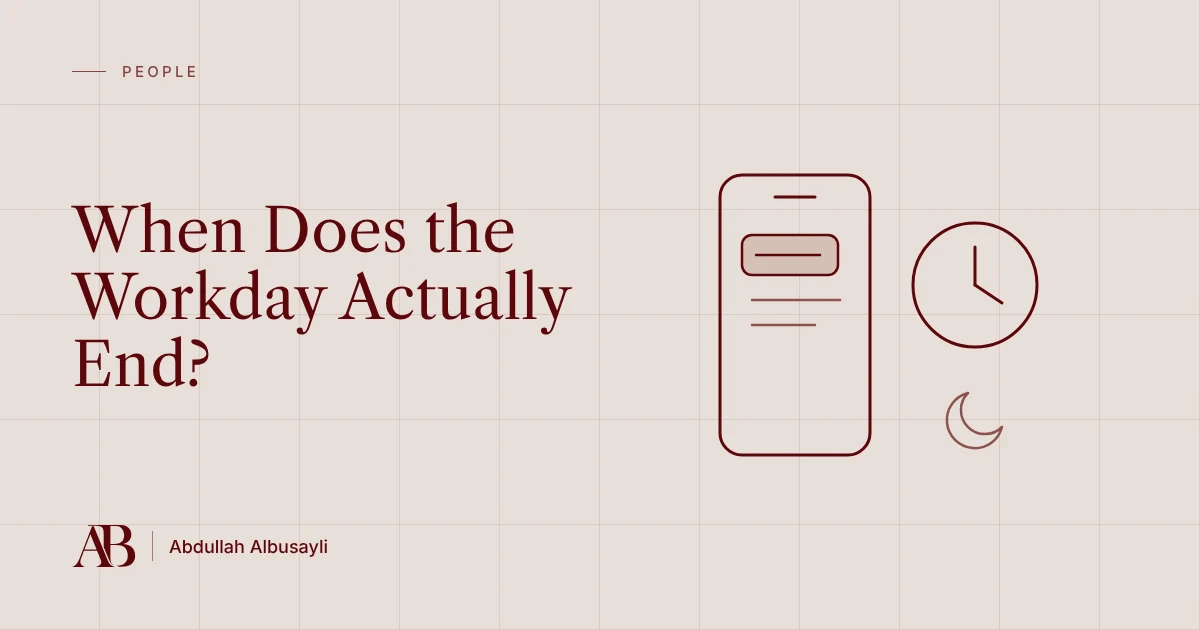
When Does the Workday Actually End?
A new hire resigned after being asked to install the work chat app on her personal phone. The real gap is the after-hours expectation nobody writes down.
I read the story of a new employee who resigned a few days after she started. The reason: she was asked to install the company's messaging app on her personal phone.
What caught my attention was not the resignation. It was the questions she asked before it:
- Would they give her a work phone? No.
- Would the company cover part of the bill? No.
- If a message came in on her day off, was she expected to reply?
The answer she got was: "We want commitment from you, not to count your hours."
She did not object to the work. She only asked whether that commitment was part of her salary, or something expected of her after hours for free.
A fair question, not always the right decision
I think her question was fair. Her decision was not right in every case.
In some jobs, speed is part of the work. A client or a team is waiting for an answer, and a messaging app is faster than email. Someone who wants to succeed in a role like that has to adapt to it. A person who refuses any contact outside working hours may have picked the wrong job in the first place, or should have asked about the nature of the work before accepting.
What the employer should say before hiring
On the other side, a company that knows its work needs fast replies has to say so clearly before hiring, not after the first day:
- Who is expected to reply?
- When?
- In exchange for what: an allowance, compensation, days off?
The expectation nobody writes down
When the expectation is not written down, the end of the workday is left to each manager's judgment, and any question about it looks like a lack of commitment.
People split over the story. Some called it immaturity. Others wished they had her nerve. My issue is not with her. It is with an old question we still have not answered: when does the workday actually end?
The fix sits on both sides. The employee understands the nature of the job they accepted, and the employer is clear about what it expects and respects the employee's time.
A question for you
Does your organization have a clear agreement, written or understood, on replying to work messages after hours? When is a fast reply a normal part of the role, and when does it become an expectation nobody ever told you about?