One Employee, Two Managers: When the Structure Leaves the Gap to the Employee
When an employee reports to one manager but works on another manager's project, they end up negotiating priorities. Dual assignments need an agreement first.
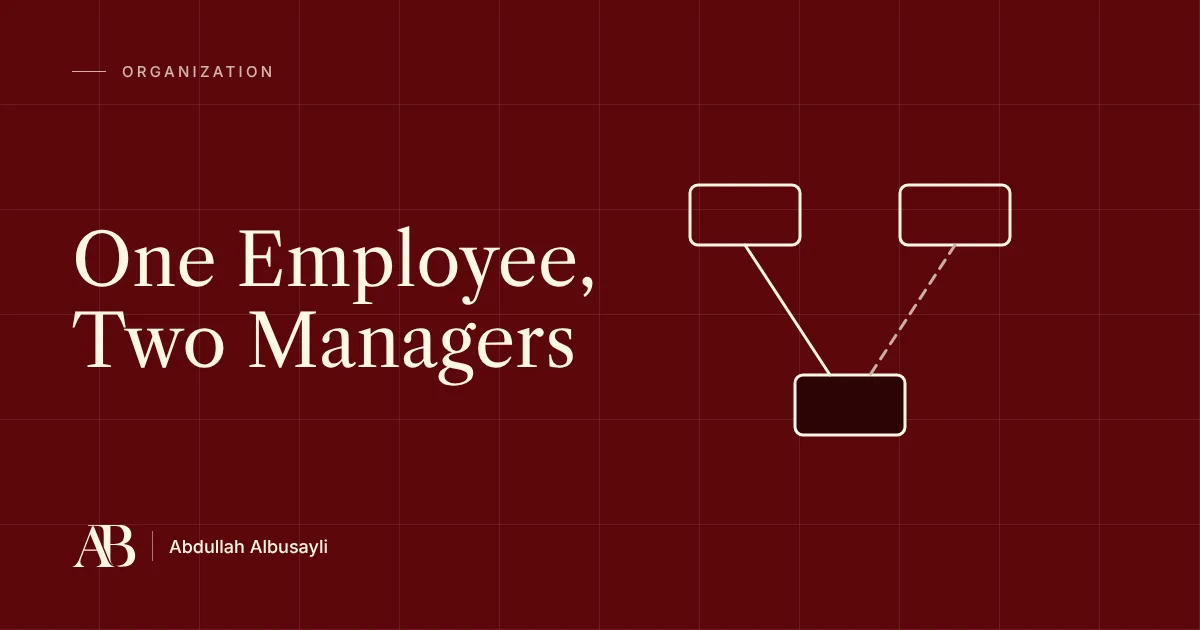
One of the most common problems I see today, both in companies and with the individuals I sit with, is an employee who has two managers, each of whom treats the employee's time as theirs. It is one of the most draining situations at work, and one of the least visible on the org chart.
An ordinary day between two managers
An employee reports to the head of their department, but is also assigned to a project led by another manager, in the same department or a different one.
In the morning the first asks for the monthly report, urgently. In the afternoon the second calls: the presentation is needed today because senior management is waiting for it. Both are right from where they stand. Neither knows about the other.
Free resource for this topic: Does your organization need restructuring?
The employee tries to keep both happy, works on both with half their focus, and falls behind on at least one. At the end of the year the department head rates them on what he saw, and does not see the effort that went into the other project. The project manager praises their work in meetings but has no say in the formal review.
Where the problem actually is
The problem is not the managers, and it is not the employee. The structure shows a direct reporting line, there is an unwritten verbal line for the project, and the space between the two is left to the employee to work out.
So the employee becomes the one negotiating priorities between two people senior to them. That is a role they should never have had to carry.
One conversation before it starts
I believe any dual assignment needs a sit-down between the two managers before it begins, to settle:
- how much of the employee's time each side gets;
- who decides when requests clash;
- how the project work counts in the employee's review.
A short conversation at the start is far easier than a year of the employee apologizing to both sides.